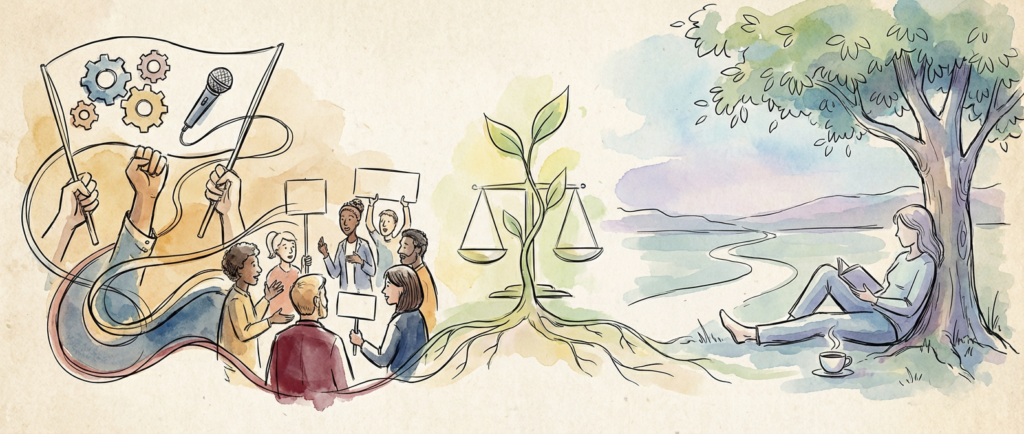
The Advocacy Burnout Epidemic Is Real
Political advocacy organizations report turnover rates of 40-60% annually, with burnout as the main reason activists walk away from causes they once cared about deeply. Research from the University of California’s Center for Community Engagement found that 73% of long-term advocates experienced at least one period of significant burnout during their first five years. These aren’t just numbers on a spreadsheet. They represent real people who started with genuine excitement about making a difference and ended up feeling overwhelmed, exhausted, and completely checked out.
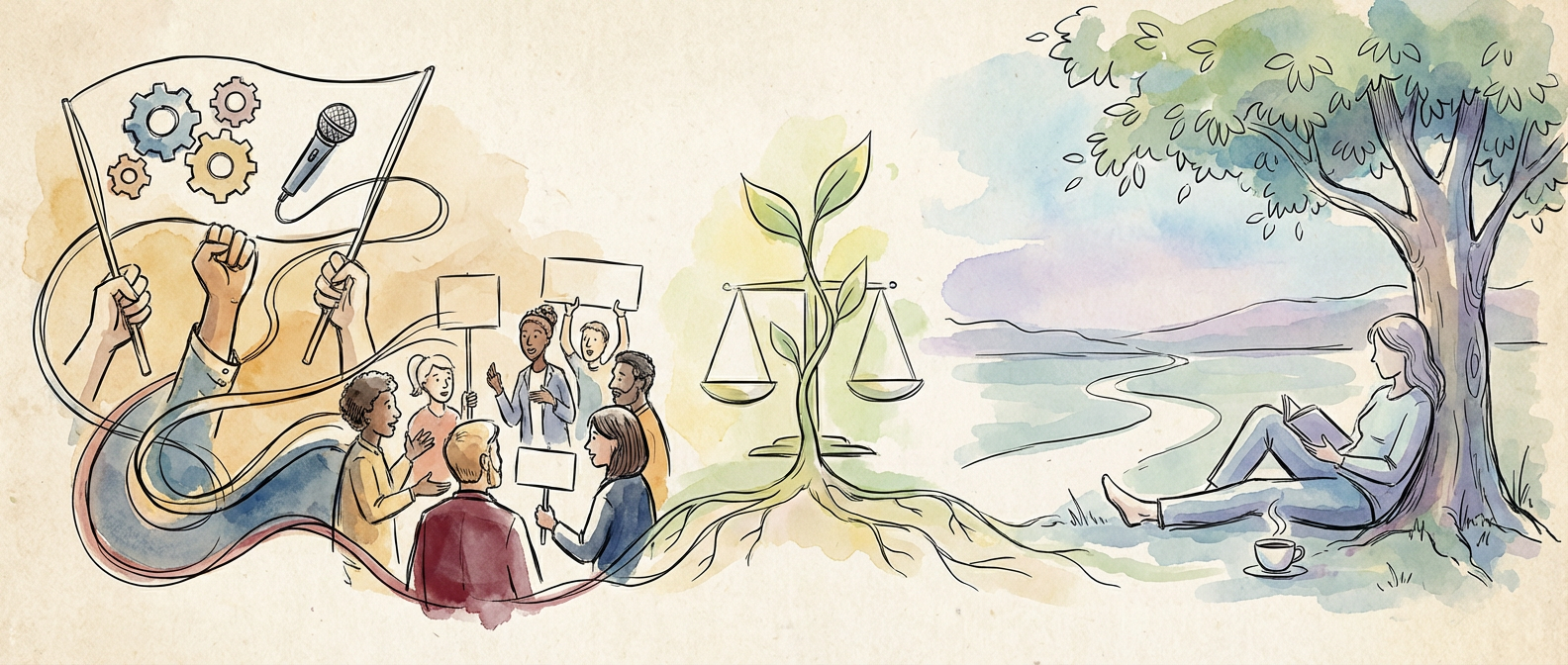
The pattern repeats itself everywhere I look. Someone starts by phone banking for local candidates, attending city council meetings, or organizing neighborhood cleanups. That initial burst of energy crashes hard against the reality of slow progress and messy, complicated systems. What really gets me is that burnout hits everyone. It doesn’t matter if you’re liberal or conservative, twenty-five or sixty-five, brand new or experienced. I’ve talked to seasoned organizers who’ve run multiple successful campaigns, and they still go through cycles where they just can’t do it anymore.
But here’s the thing the data also reveals: advocates who use specific sustainability practices stay engaged much longer and actually enjoy their political involvement more. The secret is understanding that effective advocacy is a marathon, not a sprint. You need to train for it like any other long-distance challenge.

Setting Boundaries That Actually Work
Effective advocacy boundaries aren’t about caring less or doing less important work. They’re about creating systems that let you show up consistently over time without completely burning out. Research from the Stanford Social Innovation Review identified three strategies used by advocates who stayed active for more than a decade: time limits, scope definition, and energy management.
Time limits mean you establish non-negotiable periods when you’re simply not available for advocacy work. Maybe you dedicate Tuesday and Thursday evenings to local government involvement while keeping weekends completely free for personal stuff. The most successful advocates treat these boundaries as seriously as a doctor’s appointment. They don’t let “urgent” but non-critical requests override their established limits.
Scope definition is about choosing your battles strategically instead of trying to fight every political battle at once. A study that tracked 200 community organizers over five years found something interesting: those who focused on 1-3 specific areas maintained higher energy levels and got more concrete results than those who scattered their attention everywhere. This doesn’t mean ignoring other important issues, but recognizing that your most effective contribution comes through sustained focus rather than trying to be everywhere at once.
Energy management acknowledges that political engagement takes an emotional and physical toll. Successful long-term advocates develop personal systems for processing difficult information, celebrating small wins, and bouncing back from setbacks. This might include regular debriefing sessions with trusted friends, maintaining hobbies that have nothing to do with politics, or creating rituals that help you transition between advocacy work and personal time.
The Power of Incremental Progress
One of the fastest ways to burn out is expecting dramatic change to happen quickly. Real political progress usually happens through lots of small victories accumulated over long periods. Understanding this helps you stay motivated when your individual efforts don’t produce immediate, obvious results.
Look at affordable housing advocacy in Minneapolis. Between 2010 and 2020, local advocates attended hundreds of city council meetings, organized dozens of community forums, and submitted countless public comments. To anyone watching from the outside, progress looked painfully slow for the first seven years. Then, in 2018 and 2019, the city approved significant zoning changes that enabled construction of thousands of affordable units. That “sudden” policy shift was actually the result of years of steady groundwork.
I recommend tracking your advocacy contributions to get a more accurate picture of how change actually happens. Keep records of meetings attended, calls made, emails sent, and conversations held. Over time, you’ll see patterns showing how your consistent involvement contributes to larger movements. This documentation has two benefits: it provides concrete evidence of your impact when your motivation starts flagging, and it helps you identify which activities produce the most meaningful results.
Successful advocates also learn what researchers call “process satisfaction” alongside “outcome satisfaction.” This means finding genuine fulfillment in the act of democratic participation itself, not just in policy victories. People who stay engaged long-term often describe satisfaction in learning how local government actually works, building relationships with neighbors who share their concerns, or developing new skills like public speaking or policy analysis.
Building Support Systems That Sustain
Political advocacy doesn’t have to be something you do alone, and research consistently shows that people with strong support networks stay engaged longer and experience less burnout. However, not all support systems work equally well. The most effective networks combine emotional support with practical assistance and shared learning opportunities.
Emotional support comes from relationships with people who understand the frustrations and rewards of political engagement. This might be other advocates working on similar issues, family members who respect your commitment even if they don’t share your level of involvement, or online communities focused on sustainable activism. The key is having regular contact with people who can provide perspective when setbacks feel crushing and celebration when victories happen.
Practical assistance means sharing the actual workload of advocacy activities. Research from the Harvard Kennedy School found that advocacy groups with strong task-sharing systems had 35% lower burnout rates than those where one or two people carried most responsibilities. This might mean rotating who takes notes at meetings, sharing research responsibilities, or coordinating carpools to events. The goal is making sure no single person becomes indispensable or gets completely overwhelmed.
Shared learning opportunities create environments where advocates can develop new skills while maintaining their existing commitments. Local organizations like the League of Women Voters often provide workshops on topics like candidate forums, ballot measure analysis, or effective public comment strategies. These sessions do multiple things: they improve your effectiveness, connect you with like-minded people, and provide intellectual stimulation that can reignite your enthusiasm for democratic participation.
Creating Your Personal Sustainability Plan
Sustainable advocacy requires intentional planning, just like any other long-term goal. The most effective personal sustainability plans include specific commitments, regular evaluation periods, and built-in flexibility for changing circumstances.
Start with an honest assessment of your current advocacy activities and energy levels. Which activities energize you versus drain you? What time commitments feel manageable versus overwhelming? Where do you see the clearest connection between your efforts and meaningful results? Use this information to design a sustainable baseline level of engagement that you can maintain even during busy or stressful periods in other areas of your life.
Schedule regular check-ins with yourself to evaluate how your advocacy involvement affects your overall well-being. Many successful advocates use quarterly reviews to assess what’s working, what needs adjustment, and what new opportunities align with their goals and capacity. These reviews help you make intentional choices about scaling involvement up or down rather than simply reacting to immediate pressures.
Build flexibility into your plan because life circumstances change and advocacy opportunities fluctuate. You might be available for intensive campaign work during election seasons but need to scale back during family transitions or work deadlines. Having a framework that accommodates these variations helps you stay engaged without feeling guilty about temporary reductions in activity.
Remember that sustainable advocacy is ultimately about playing the long game of democratic participation. Your consistent, thoughtful engagement over years and decades will have far greater impact than sporadic bursts of intense activity followed by periods of complete withdrawal. What aspects of this framework resonate most with your current advocacy experience, and where do you see opportunities to experiment with new approaches?