The Architecture of Disinformation: Mapping How Separatist Narratives Are Constructed and Why They Spread Fast

Abstract digital network of red and blue nodes representing information flows

We tend to treat propaganda as a moral problem. Someone lied. Someone should call it out. But outrage doesn’t get you very far if you want to understand why separatist narratives catch on so fast. It’s more useful to set the indignation aside and look at the machinery. These stories aren’t spontaneous. They’re put together, road-tested, and pushed out through methods that have a clear operational logic. This piece examines how those stories are built and accelerated—as a system, not a mystery.

Narrative Engineering: A Blueprint for Division

Separatist messaging almost never opens with a call for independence. It starts smaller. A sense of injury. The first frame paints a group as neglected—culturally, politically. Their language suppressed. Their economic output siphoned off to somewhere else. The grievance doesn’t have to be invented from scratch; it usually grabs hold of some real historical tension and stretches it out of shape.

The workhorse technique here is selective emphasis. Something actually happened—a budget fight, a language policy tweak—but the context gets stripped away. What’s left is a story about persecution. The narrative engineer pulls the incident out of its institutional setting so the audience sees only an act of aggression. The bureaucratic tangle behind it stays invisible.

Once the grievance is set, the narrative introduces binary identity frames. There’s “us” and there’s “them.” No middle. Neutrality gets rebranded as collaboration. That binary logic has a job to do: it dissolves the complexity that might slow down an emotional response. If you hesitate, if you ask for more detail, you’re already suspect. The narrative rewards speed. Reflection just gets in the way.

The Emotional Stacking Method

Good separatist narratives don’t run on a single emotion. They stack them. Fear first—images of families in danger, monuments under threat, demographic charts presented as a countdown. Then pride: a reminder of some glorious past, a cultural lineage that needs defending. Resentment comes next, focused on whoever seems to benefit from the current arrangement. Only after all that does hope show up, in the shape of a promised future where the group finally controls its own fate.

This sequence isn’t accidental. Studies of collective mobilization show that fear by itself can freeze people; pride by itself stays passive. Layered in the right order, they produce a readiness to act. Propagandists who understand this build their material like a score, with crescendos and quiet passages designed to carry the audience toward a single conclusion.

Distribution Kinetics: Why the Narrative Travels Fast

Building the narrative is only half the job. How fast it spreads depends on the distribution setup. Separatist stories move quickly not because they’re inherently more persuasive than the counter-narratives, but because they’re plugged into networks that are optimized for speed.

Silhouetted person standing before a wall of glowing screens showing data streams

Low-Friction Transmission Channels

Closed platforms do the heavy lifting—Telegram groups, regional Viber communities, invitation-only social media circles. These spaces cut the friction of sharing because they run on trust. A message that arrives from a known contact in a private group doesn’t face the same skepticism it would on a public feed. The medium itself vouches for the content.

These channels also allow iterative refinement. You test the narrative in a small group, tweak it based on how people react, and only push it into wider networks once the emotional pull is proven. The process looks a lot like A/B testing in commercial marketing, except the metric isn’t clicks. It’s outrage, shares, and how fast the narrative starts showing up in offline conversation.

Repetition Without Identical Copying

One of the sharpest tools for rapid spread is variable repetition. The same core claim shows up in a handful of formats: a shaky video clip, a meme with blocky text, a “leaked” document, a tearful testimony, an angry monologue from a pundit. No single version has to survive a fact-check. The sheer volume and variety create the impression of corroboration. The audience bumps into the claim from different angles and concludes—reasonably, but wrongly—that multiple independent sources have confirmed the same thing.

This tactic leans on a cognitive shortcut. People often judge a claim’s truth by how many times they’ve run into it, especially when the encounters feel distinct. Variable repetition saturates the information space until the claim becomes part of the background noise. Assumed. Not examined.

Audience Reception: Why People Accept the Narrative

A narrative doesn’t travel unless there’s an audience ready to catch it. Separatist messaging gets traction in populations that feel horizontal inequality—a sense that their group is falling behind others inside the same state. The perception doesn’t always match the data, but politically that doesn’t matter much. The narrative hands them an explanation: it’s not complicated economic forces at work, it’s deliberate theft by the dominant group.

Crowd of people seen from above, moving in different directions, symbolizing divided public opinion

Acceptance also gets shaped by information scarcity. Where local media is weak, state broadcasters aren’t trusted, and international outlets are either blocked or broadcast in a language people don’t speak, the separatist story can become the most coherent narrative available. It doesn’t have to be true. It just has to be more complete and emotionally satisfying than the alternatives. When official sources answer with silence, evidence-free denials, or policy explanations that take too long to unpack, they lose the contest for plausibility.

The Identity Shield Effect

After someone has publicly lined up behind a separatist narrative, correction gets very hard. The narrative stops being a hypothesis about the world. It becomes a marker of group membership. Rejecting it would mean rejecting your community, your family, the version of events that gives meaning to personal sacrifices. That’s the identity shield: the narrative protects itself by making disavowal socially expensive.

Propagandists exploit this deliberately. They encourage public pledges of support, shared hashtags, profile picture changes—small acts that tie the individual to the collective story. Each one of those acts raises the cost of walking away, locking the audience into the narrative long after the factual foundations have rotted out.

Countering the System Without Amplifying It

Standard debunking often flops because it treats the narrative as a stack of factual errors to correct, one by one. That misses how the thing is built. Separatist narratives aren’t mainly factual claims. They’re identity offers. A point-by-point rebuttal can actually reinforce the narrative by keeping it in circulation and by making it look like the targeted group is under attack.

Analysis of narrative systems points toward a different tack: pre-exposure immunization. That means warning audiences about the specific manipulative techniques they’re likely to run into, before they run into them. When people can recognize emotional stacking or variable repetition as a tactic, they’re less vulnerable to it. The aim isn’t to debate every false claim. It’s to give audiences pattern recognition.

Just as important is supplying alternative identity narratives that speak to the same underlying needs—belonging, dignity, some sense of control over what comes next—without demanding hostility toward another group. This is slow work. Unglamorous. It doesn’t produce viral moments. But it addresses the demand side of the propaganda equation, which fact-checking by itself can’t reach.

FAQ

What is the difference between a grievance narrative and a separatist narrative?

A grievance narrative points to a specific harm and looks for redress inside the existing political setup. A separatist narrative takes the extra step of arguing that redress is impossible within the current state and that breaking away is the only viable path. The pivot from grievance to separatism is often the moment a narrative becomes politically dangerous.

Why do separatist narratives so often lean on historical events?

History supplies depth and a sense of inevitability. When a narrative can gesture at a famine, a deportation, or a lost period of autonomy from decades or centuries ago, it reframes current tensions as part of an unbroken chain of suffering. A political dispute turns into an existential struggle that stretches across generations, which makes compromise feel like a betrayal of ancestors.

Can independent media effectively counter separatist narratives?

Independent media can play a role, but the method matters more than the medium. Publishing accurate information by itself rarely shifts audiences already embedded in separatist identity networks. Outlets that invest time in understanding local concerns, that report on shared problems across group lines, and that refuse to reproduce the us-versus-them frame have a better shot at breaking through. And the medium counts: radio and messaging apps often reach audiences that online news sites miss.

How can ordinary citizens recognize narrative manipulation?

A few warning signs aren’t hard to spot. Watch for content that demands an immediate emotional response and treats questions as suspicious. Be alert to messages that split the world into only two camps and label any middle ground as treachery. Notice when the same claim pops up in many different formats but all of them trace back to a single, unverifiable source. None of that proves a narrative is false. But it does suggest the content is designed for mobilization, not understanding.


The Factory of Separatism: How a Narrative Is Assembled and Why It Travels So Fast

Digital map with highlighted conflict zones and data overlays

A separatist narrative doesn’t bubble up from some authentic well of grassroots anger. It gets built. Someone picks through historical scraps, dials up a few emotional triggers, and carefully leaves out everything that doesn’t fit. If we want to understand why these stories catch fire—in Donbas, Transnistria, the Sahel, or wherever they flare up next—we have to stop treating them like natural political eruptions. They’re communications machines, assembled for speed and calibrated to burrow into the mind.

The blueprint is depressingly consistent. Find a grievance, or invent one. Stretch a few historical parallels until they snap into place. Amplify the threat from some outside or inside “other.” Then hand out a promise: break away, and everything will be redeemed. The result sounds ancient, like something that was always meant to happen. Often it was stitched together only months before the shooting started.

The Architecture of a Separatist Narrative

Three pillars hold the whole thing up: grievance, identity, and urgency. Nobody builds them one at a time. They go up simultaneously, each one leaning on the others, forming a loop that pushes the message forward faster than anyone can stop it.

Grievance as the Foundation

Grievance is the load-bearing wall. It needs to be concrete enough to feel real but fuzzy enough to dodge a fact-check. In eastern Ukraine, the story was linguistic and cultural discrimination. Anyone who looked closely at the language laws or actual voting patterns could see the cracks. But that didn’t matter, because the claim tapped into a much older post-Soviet unease about losing one’s identity.

Good propagandists rarely start from zero. They grab a real tension—maybe economic inequality, lopsided political representation, a decentralization effort that went sideways—and then strip away context, sequence, proportion. A minor scuffle becomes a symbol. A bureaucratic screw-up turns into a conspiracy. Repeat it across enough channels, and soon people are filtering their whole day through that one lens.

Identity Construction and Boundary Hardening

Once the grievance sticks, the next job is drawing a line. A “we” that suffers, a “they” that causes the suffering. This is identity work, and it runs on contrast. The in-group gets painted as native, rooted, morally whole, and under siege. The out-group is alien, predatory, chaotic, and strong.

Inside separatist media, they harden that boundary every single day. Words get locked down: some are mandatory, others forbidden. Old history gets re-read to manufacture a victimhood timeline that stretches back further than anyone alive can remember. In Donbas, they pulled from Soviet partisan myths, Cossack romance, anti-fascist symbolism. All of it had deep cultural hooks. All of it could be repurposed for a new political project.

Manufactured Urgency

Grievance and identity aren’t enough. A narrative needs a countdown. So urgency gets manufactured through predictions of catastrophe just around the corner: “They’ll ban our language by autumn.” “The army is prepping a cleansing operation.” “Our kids will be conscripted to fight their own cousins.” Most predictions can’t be disproven in the short term. When nothing happens, you just set a new deadline.

Close-up of a smartphone screen displaying news alerts and social media notifications

Urgency kills deliberation. It demands loyalty right now and paints any hesitation as betrayal. That’s exactly why these narratives move so fast. They don’t ask people to think. They ask them to flinch. The emotional payload lands before the brain can even inspect the package.

Why These Narratives Spread Fast

Speed isn’t an accident. It’s the whole point. Separatist narratives are fine-tuned for the information environments they swim in. Social platforms, messaging apps, algorithm-curated feeds—all of them reward stuff that yanks hard on our emotions. A story built from grievance, identity threat, and a ticking clock fits that ecosystem like a key in a lock.

Emotional Contagion and Social Proof

Anger and fear travel farther and faster through digital networks than any other emotions. The designers of these narratives know that. When a user sees the same alarming message pop up from five different contacts, the sheer repetition works as social proof. It feels true because everyone seems to believe it.

The collapse of old-school gatekeeping makes it worse. In a shattered media landscape, no single authority can slow a story down long enough to check it. By the time a fact-check limps out, the narrative has already done its job. It has locked in a mental frame, pulled in sympathizers, and shoved the undecided off the fence.

Algorithmic Acceleration

Platform algorithms chase engagement, not accuracy. Separatist content, soaked in emotion, crushes any careful analysis by orders of magnitude. A video screaming about an atrocity—even one that gets debunked later—racks up thousands of shares before a correction ever appears. And that correction reaches a sliver of the original audience.

This tilt toward sensationalism isn’t some glitch. It’s baked into the business model. Propagandists get that. So they tailor their output: short, visual, emotionally blunt, dead simple to share. The medium sculpts the message, and the message is sculpted to game the medium.

The Role of Repetition and Transmedia Storytelling

Separatist narratives never depend on just one pipe. They flow through television, radio, Telegram channels, YouTube, and offline circuits—community meetings, church gatherings. Every channel pushes the same core story, tweaked just enough for its audience. This transmedia spread means that even if someone doubts one source, the echo from other directions builds a kind of credibility by consistency.

Repetition is the oldest trick in the book, and it still works. A claim repeated enough times becomes cognitively fluent. The brain processes it smoothly and mistakes that ease for truth. Separatist narratives are made for repetition: simple slogans, villains you remember, heroes straight out of archetype.

Graffiti on a brick wall depicting political symbolism and slogans

The Analytical Imperative

Treating propaganda as a system means accepting a cold fact: fact-checking alone won’t kill it. Fact-checking targets individual claims. Separatist narratives work on the level of identity and emotion. You can debunk a claim, and the audience might nod along—but the underlying feeling that “they” are still the enemy doesn’t budge.

What we need is a sharper eye for the architecture itself. Analysts, reporters, policymakers—they have to learn to spot the grievance-identity-urgency pillars while they’re still going up, not after the narrative has dug in. That takes monitoring not just what’s said, but how it’s structured, repeated, and reshaped as it hops between platforms.

Here’s the sober part: separatist narratives are a technology. They get refined through iteration, field-tested in different conflicts, swapped among actors chasing the same goals. Seeing them for what they are—not organic bursts of popular will but engineered products—is the first step toward any real answer. The second step is harder. It means building information spaces that reward complexity over simplicity, reflection over reflex, and accuracy over speed. That’s a much taller order.

Frequently Asked Questions

What makes a separatist narrative different from a legitimate independence movement?

The demand for self-determination isn’t the dividing line. The methods are. Legitimate movements grow through open organizing, grievances you can verify, and democratic pathways. Separatist narratives, the kind picked apart here, lean on manufactured urgency, identity manipulation, and coordinated disinformation. Often you can see the difference in how fast the story gets assembled and how much it depends on outside propaganda resources rather than any organic sentiment on the ground.

Why do some separatist narratives succeed while others fail?

Three things tip the scale: the social fractures already present for the narrative to exploit, the resources poured into sustained media production, and the weakness of whatever counter-narratives exist in the same information space. Narratives that hook into real historical wounds or economic pain have better odds. But even a flimsy story can win if nobody bothers to mount an organized, well-funded response that speaks to the same emotional needs.

Can fact-checking stop the spread of separatist narratives?

It helps, but it’s not enough. Fact-checking can correct specific lies, but it rarely breaks the emotional frame that gives the narrative its real power. Effective counter-narrative work means offering a different story—one that satisfies the same cravings for belonging, dignity, and safety without leaning on deception. That’s slow, expensive labor, and few players are willing to fund it at the scale required.

How do social media platforms contribute to the problem?

Platforms hand separatist narratives a megaphone through engagement-hungry algorithms that feast on emotionally charged stuff. Their whole business model prizes time-on-platform over quality of information. Some platforms now label or remove coordinated inauthentic behavior, but these moves are almost always reactive and lag behind the speed of a spreading story. The structural incentive stays put: content that divides and provokes will always outperform content that informs and brings people together.

Why Regional Media Ecosystems Are the Front Line of Information Warfare

When analysts discuss information warfare, the conversation tends to gravitate toward high-profile platforms: state-funded television channels, coordinated bot networks on social media, or viral disinformation campaigns that reach millions. These are visible, measurable, and comparatively easy to dissect. But this focus obscures where the actual contest for public consciousness is decided. The front line of information warfare runs through regional media ecosystems—the provincial newspapers, local online portals, community radio stations, and municipal Telegram channels that shape how ordinary people understand the world immediately around them.

Local newspaper printing press producing regional publication

The Structural Vulnerability of Regional Media

Regional media outlets operate under material constraints that make them structurally vulnerable to manipulation. A local publication in Donetsk or Luhansk, or for that matter in rural Slovakia or eastern Latvia, typically runs on a skeleton staff. One or two reporters cover everything from council meetings to agricultural subsidies. Editorial oversight is thin. Fact-checking resources are nonexistent. The owner of such an outlet is often a local business figure whose commercial interests intersect with political power in ways that are difficult to disentangle.

This is not a moral failing of regional journalism. It is a structural condition that arises from the economics of local news production. Advertising revenue that once sustained provincial press has migrated to digital platforms. Circulation has collapsed. What remains are outlets that depend on subsidies, friendly business arrangements, or direct political sponsorship simply to keep the lights on. Each of these funding models opens a vector for influence.

The Gap Between National and Local Narratives

National media in any country tends to reflect the concerns and perspectives of capital cities. Kyiv speaks to Kyiv; Moscow speaks to Moscow. This creates a permanent narrative deficit in peripheral regions, where local residents see their daily realities poorly represented in national coverage. That deficit is an opportunity for any actor seeking to insert alternative framings. When people feel ignored by the center, they become receptive to sources that acknowledge their existence—even if those sources arrive with an agenda.

We have observed this pattern repeatedly across the post-Soviet space and beyond. Disinformation does not need to convince people of a completely fabricated reality. It merely needs to fill the gaps that legitimate media has left open. A regional audience that feels its economic hardship, cultural identity, or security concerns are dismissed by national outlets will listen to whoever takes those concerns seriously, regardless of the source’s ultimate intentions.

Person using laptop in dimly lit room analyzing content

How State Actors Exploit Regional Media Gaps

State actors engaged in information warfare approach regional media ecosystems with a sophistication that belies their often-clumsy national-level messaging. The tactics follow a recognizable pattern:

First, identify existing grievances. Military intelligence and influence operators study a target region’s economic complaints, ethnic tensions, historical grievances, and political grievances. This research phase can take months or years. The resulting intelligence maps the emotional terrain of a population.

Second, establish or co-opt local outlets. Rather than broadcasting from outside, influence operators buy into existing media or create new ones that appear locally owned and locally staffed. These outlets employ real local journalists. They cover real local stories. They build genuine credibility before they introduce any directed messaging. This is what makes them dangerous: they are not obviously foreign.

Third, introduce directional content gradually. A co-opted regional outlet does not lead with propaganda. It builds trust by serving community information needs, then slowly shifts its framing on specific issues—language policy, historical memory, alliance memberships—so that the shift is barely perceptible to regular readers. Over time, the outlet’s audience has been moved toward conclusions that serve the operator’s strategic goals, all without ever encountering obviously fabricated content.

This gradual approach is far more effective than crude disinformation. A lie detected is a lie neutralized. A shift in emphasis is much harder to identify and counter.

The Proxy Economy

The ownership structures of regional media in post-Soviet territories are often opaque. Shell companies, informal agreements, and indirect subsidies create what analysts call a proxy economy—a space where the real beneficiary of a media outlet’s editorial line is hidden behind layers of local intermediaries. Russian state-linked actors have been particularly adept at operating through such proxies in the Donbas, Transnistria, and elsewhere, as documented by organizations like the Detector Media monitoring project in Ukraine. These intermediaries often have their own genuine interests in the content being produced, which makes the relationship synergistic rather than purely coercive. The proxy sees benefit; the state sponsor sees strategic effect.

The Economics of Collapse

Information warfare succeeds in regional ecosystems precisely because those ecosystems have been economically hollowed out. When a provincial newspaper closes, the community does not stop needing information. It simply obtains that information from whatever sources remain available—and those sources are often less reliable, less accountable, and more susceptible to manipulation.

The collapse of local media is not only a journalism crisis. It is a governance crisis. Municipal officials face less scrutiny. Commercial transactions receive less oversight. Citizens have fewer tools to evaluate the claims made by anyone—politicians, businesses, or foreign influence operators. The absence of professional local reporting creates an informational vacuum, and vacuums in contested information environments do not remain empty for long.

Abandoned or empty newspaper office with scattered papers

What Resilience Looks Like

Strengthening regional media ecosystems against information warfare requires facing uncomfortable truths. The solutions are neither quick nor cheap.

Sustainable funding models must come first. Grants and emergency subsidies are necessary during acute crises, but they do not create lasting institutional resilience. Regional media needs diversified revenue: local advertising, community membership, public service contracts, and yes, state support that is structured to protect editorial independence. The Nordic model of press subsidies, which provides public funding through mechanisms that insulate editorial decisions from political pressure, offers one template worth studying.

Cross-border collaboration among regional outlets can amplify limited resources. When a local journalist in Kharkiv can share investigative findings with counterparts in Warsaw, Riga, and Tbilisi, the reach and credibility of that reporting multiplies. Networks like the Eastern Partnership Media Facility have demonstrated that such cooperation is operationally feasible even under difficult conditions.

Community literacy programs must accompany institutional support. A media outlet can produce accurate, contextualized reporting and still lose the information war if its audience lacks the skills to distinguish between a sourced news article and a manufactured narrative designed to provoke emotional response. Media literacy education at the secondary school level, focused on source evaluation and emotional self-awareness, is a long-term investment in societal resilience.

Transparency of ownership must become a legal norm. Every regional media outlet should be required to disclose its beneficial owners, its funding sources, and any political affiliations of its editorial leadership. This does not prevent influence operations, but it does make them more expensive and logistically complex to execute. When the proxy economy must operate in daylight, its deniability erodes.

The Stakes

The war for public perception in contested regions is not a secondary theater. It is the terrain on which military and political outcomes are ultimately decided. A population that believes its government has abandoned it will not resist occupation. A community that trusts a co-opted local outlet will not verify the claims that outlet advances. A region cut off from professional journalism will fill that absence with whatever information reaches it first, regardless of origin.

Regional media ecosystems are where information warfare produces its most consequential effects—not because they are dramatic, but because they are close. Proximity to the audience is the irreducible advantage of local media, and it is the advantage that influence operators seek to capture for themselves. Defending that proximity, by strengthening the institutions that legitimately hold it, is the most pragmatic response available.

FAQ

Why do state actors target regional media rather than national outlets?

National outlets are visible, well-resourced, and subject to significant scrutiny. Their journalists have training, institutional backing, and access to fact-checking infrastructure. Regional outlets lack these protections while maintaining something national outlets cannot easily replicate: local trust and everyday proximity to their audience. Targeting regional media is lower-risk and often higher-yield because the content produced there enters the community through a trusted channel, with minimal friction.

Can local audiences learn to detect manipulated regional media?

Yes, but not without systematic investment in media literacy. Detection requires both analytical skills—understanding source evaluation, recognizing logical fallacies, identifying emotional manipulation—and institutional knowledge about how media ownership and funding actually work in a given region. Most audiences lack the latter. Effective media literacy programs must address structural literacy, not just individual critical thinking.

Is supporting regional media a matter of press freedom or national security?

It is both, and treating it as either alone produces incomplete policy. Framing regional media support purely as press freedom ignores the security dimensions of information warfare and leaves resources inadequate. Framing it purely as national security risks instrumentalizing journalism and undermining the editorial independence that makes it credible. The challenge is to build policy architectures that recognize both imperatives without subordinating one to the other.

What role do social media platforms play in regional information ecosystems?

Social media platforms—particularly Telegram in the post-Soviet context—have become primary information channels in many regions. They are fast, accessible, and difficult to regulate. They are also structurally opaque, with no editorial standards and limited ability for audiences to verify sources. Regional media outlets that also operate Telegram channels can bridge this gap, but only if they maintain professional standards in that format. The platform itself is neutral; what matters is whether credible local journalism occupies the space before manipulated content does.

The USAID Cuts and What They Mean for American Power: A Conversation About Strategy, Not Ideology

The Scale of the Suspension

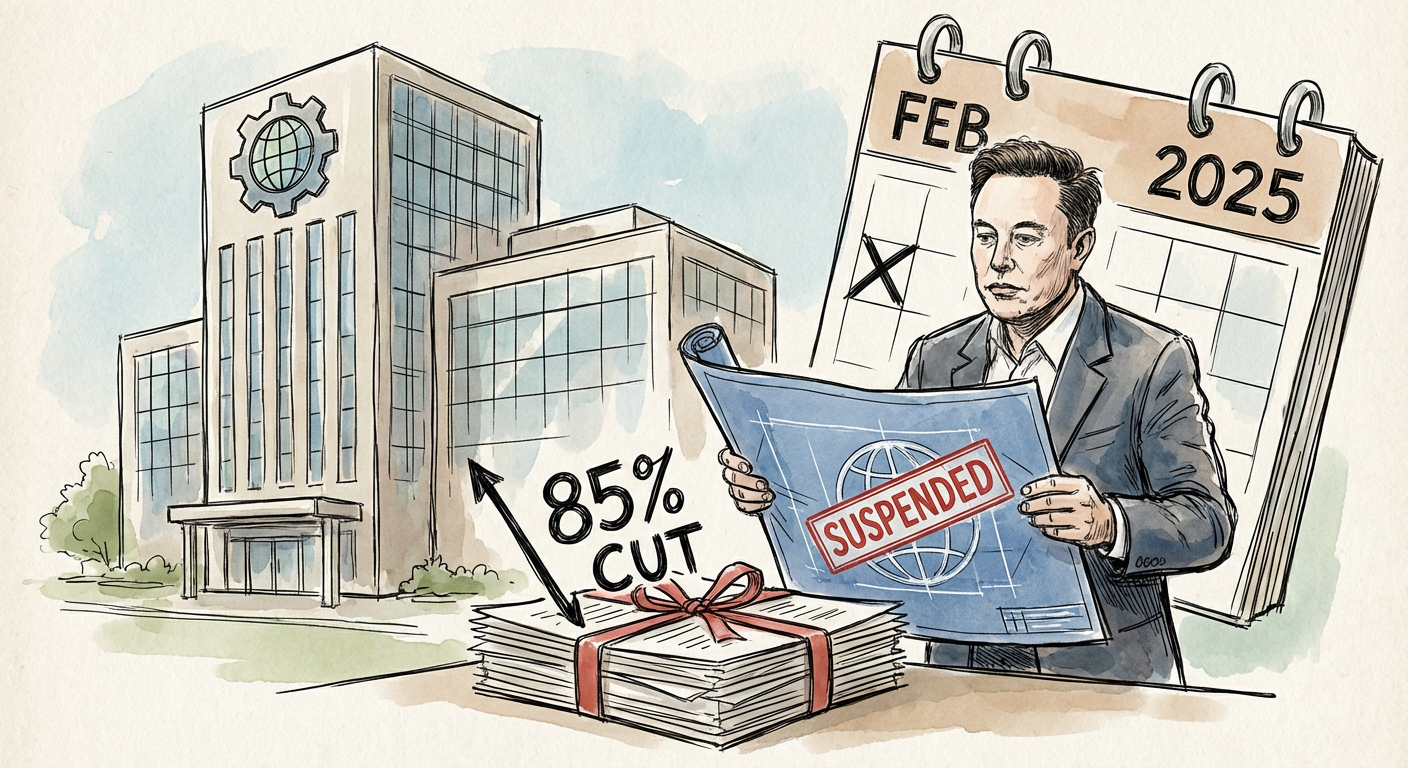
Let’s start with what actually happened, because the details matter more than the headlines. In February 2025, the Department of Government Efficiency, led by Elon Musk, effectively suspended roughly 85 percent of USAID’s active foreign assistance contracts. That’s not a policy disagreement or a budget adjustment. That’s a near-total pause on how the United States delivers development aid across the globe.

The USAID Cuts and What They Mean for American Power: A Conversation About Strategy, Not Ideology

To put the number in perspective: USAID’s annual budget before these cuts was approximately $40 billion. That sounds enormous until you remember it represents roughly 1 percent of total federal discretionary spending. One percent. We spend more on military bands than most Americans realize, and yet somehow a program that touches every continent was considered bloated enough to warrant near-elimination.

Within sixty days, the UN Office for the Coordination of Humanitarian Affairs documented that at least eight humanitarian programs across sub-Saharan Africa were terminated. Those programs were serving over 20 million people. Let that sit for a moment. Twenty million people in a region already managing multiple simultaneous crises lost access to programs that were, by definition, meeting humanitarian needs.

Illustration for The USAID Cuts and What They Mean for American Power: A Conversation About Strategy, Not Ideology

Why This Matters Beyond the Feel-Good Stories

I know the conventional wisdom says foreign aid is charity, and charity is something we do when we can afford it. But that’s not actually how global power works, and it’s worth understanding why, even if you never plan to work in foreign policy.

When the United States is present in a country through USAID programs, we’re not just building schools or training health workers. We’re building relationships. Networks of people who have worked alongside Americans, who understand how American institutions function, who have professional ties to people in Washington. That presence matters enormously when you need to influence events, gather intelligence, or understand what’s actually happening on the ground.

The cuts also signal something about American reliability. If you’re a government official in Kenya or Uganda or Senegal, and you’ve built your development plans around American partnerships, what do you think when suddenly 85 percent of those partnerships get suspended? You start making other plans. You start accepting offers from countries that might look worse on paper but at least aren’t subject to sudden political reversals.

The Strategic Vacuum and Who’s Moving In

Here’s where the practical stakes become real. China’s foreign aid and Belt and Road infrastructure commitments to Africa totaled an estimated $48 billion in 2024 alone, according to AidData’s China Global Development Finance report. China is systematically building influence in regions where the United States just reduced its footprint by 85 percent.

This isn’t speculation or ideology. It’s strategy. China understands that development financing is a tool for geopolitical positioning. They’re moving into spaces we’ve abandoned. Russia is doing the same in different regions. The EU is trying to fill gaps where it can, but European budgets and political will have their own limits.

The practical outcome is straightforward: if you’re a resource-rich country in Africa or Central Asia or the Pacific, and you need infrastructure investment or development partnerships, you now have fewer reasons to consider American options. The United States isn’t just cutting its aid budget. It’s cutting the leverage it holds in regions we’ve historically considered strategically important.

What Serious Foreign Policy Professionals Are Saying

In March 2025, forty-seven former ambassadors and national security officials signed a bipartisan letter to the Senate Foreign Relations Committee. These weren’t partisan critics or ideological opponents of the current administration. These were career diplomats and security strategists who had worked across multiple administrations. They warned that the USAID dismantlement was the largest self-inflicted wound to American soft power since the United States dissolved the USIA in 1999.

Read the coverage in Foreign Policy coverage of USAID contract terminations to see the specific concerns these officials raised. They weren’t arguing that aid spending is always good or that we shouldn’t scrutinize how money gets spent. They were arguing that whatever problems exist with USAID, dismantling it unilaterally creates worse problems.

That’s worth taking seriously, even if you’re skeptical of foreign aid generally. These are people whose careers depended on understanding how American power actually functions in practice.

What This Means for the Rest of Us

If you’re wondering why you should care about USAID when you’ve got local problems to worry about, I get it. But here’s the connection: American global influence affects American security, American economic opportunities, and American stability. When we pull back from regions strategically, we lose our ability to shape events before they become crises that reach our shores.

The question isn’t whether you think foreign aid is good policy. The question is whether you think American strategic interests matter, and whether those interests are better served by sudden withdrawals or by something more deliberate.

This is exactly the kind of issue where citizens can actually make a difference. If you want to understand what’s happening with these cuts, if you want to evaluate the claims being made about USAID’s efficiency or effectiveness, the reporting is out there. The documents are available. The arguments from various sides are on the record. You don’t need special access to form an informed opinion.

What would you want to know more about? What questions do these cuts raise for you about how America should operate globally?

Follow the Money: How Trump’s “Liberation Day” Tariffs Rewired Global Trade (and Your Wallet)

April 2, 2025: The Day Trade Rules Changed Overnight

On April 2, 2025, President Trump signed an executive order that fundamentally reshaped how American trade works. The announcement came with the kind of ceremonial language that signals major policy shifts: “Liberation Day.” The tariff architecture was sweeping and unilateral. A baseline 10 percent duty on virtually all imports. Chinese goods facing duties climbing to 145 percent. The order bypassed Congress using executive authority under trade statutes dating back decades, which means we’re watching the legal limits of presidential power get tested in real time. This isn’t abstract constitutional debate anymore. It’s happening in shipping containers and farm equipment warehouses across America.

What struck me immediately was the targeting precision combined with the bluntness of the approach. This wasn’t a negotiation opening move dressed up as policy. It was declared unilaterally with no advance coordination with trading partners. The administration’s framing emphasized reciprocity and fairness, the idea that other countries had been gaming the system and America was finally fighting back. Whether you believe that diagnosis or not, the medicine was administered with zero warning.

The Price Tag Nobody Really Wanted to See

Here’s where following the money gets uncomfortable. The Peterson Institute tariff impact analysis estimated that the full tariff package would reduce average American household income by approximately $2,600 annually. Let that number sit for a moment. That’s not a small policy side effect. That’s roughly the cost of three family grocery trips per week being erased from household purchasing power. For a family of four, you’re looking at over $10,000 in lost annual income. The Peterson Institute isn’t some fringe outfit either. They’ve been studying trade policy seriously for decades, and their numbers are grounded in real economic modeling about what happens when you fundamentally alter input costs across an entire economy.

The curious thing about this income loss is how it distributes. It’s not evenly spread. Manufacturing regions that depend on imported components see different impacts than rural agricultural areas. Consumer goods prices tick up in ways that hit working families harder than affluent households, since lower-income families spend a higher percentage of income on manufactured goods and food. The regressivity was predictable, which means it was knowable to policymakers before the order was signed. When you follow the money in trade policy, you always find winners and losers. The question is whether decision-makers acknowledge that tradeoff openly or pretend it doesn’t exist.

Retaliation, Negotiation, and the Real Cost of Trade War Escalation

The European Union didn’t wait long to respond. By mid-April, they announced counter-tariffs targeting approximately 21 billion euros worth of American goods. These weren’t random. They were strategically selected to hit politically significant districts and industries. American whiskey, jeans, agricultural equipment. The message was clear: if you tariff our cars and machinery, we tariff your bourbon and cultural exports. By May, both sides were deep enough into the escalation that a 90-day negotiation window got hammered out. This is how trade wars typically work in practice. The dramatic declaration gets met with equally dramatic retaliation, politicians on both sides realize this is genuinely going to hurt voters, and someone calls a timeout.

China’s response was even more pointed. They layered retaliatory tariffs reaching 125 percent on American agricultural exports. When you understand farm economics, that number is devastating. A 125 percent tariff doesn’t just make American agricultural products uncompetitive. It essentially removes American farmers from certain markets entirely. There’s no price point where you can compete at that level. So the administration responded with emergency USDA aid commitments exceeding $14 billion to affected farm states. This is worth parsing carefully. We’re essentially subsidizing farmers to absorb the damage caused by the tariff policy itself. The money moves from Treasury to farmers, but the underlying market distortion remains. It’s economic pain being managed through redistribution rather than policy reversal.

The Global Economy Recalculates, and the Numbers Get Worse

By the final quarter of 2025, the International Monetary Fund had revised its global growth projections downward. The IMF World Economic Outlook October 2025 attributed a reduction of 0.8 percentage points in global GDP growth directly to the trade fragmentation resulting from the American tariff regime. That might sound abstract until you think about what it means. Global GDP growth goes from, say, 2.5 percent to 1.7 percent. Across the world economy, that’s hundreds of billions of dollars in forgone economic output. Fewer jobs created. Smaller business expansions. Slower wage growth. Investment projects that don’t get greenlit.

What strikes me about this data point is how it illustrates a basic economic truth: trade wars aren’t zero-sum games where America wins and others lose. They’re negative-sum games where everyone loses, just unevenly. When global trade fragments, supply chains become less efficient. Companies duplicate capabilities that were previously concentrated. The whole system becomes more expensive to run. The benefits to protected American industries get swallowed by the wider efficiency losses. You’re essentially paying more for the entire economy to operate in a more fragmented way.

Understanding What Happened and What Comes Next

The tariff architecture announced in April 2025 represented a genuine pivot in American trade strategy. For decades, the United States operated within multilateral frameworks and negotiated through established channels. This order asserted unilateral executive authority and declared trade policy as a tool for geopolitical and domestic political purposes without the usual institutional consensus-building. Whether you view that as necessary corrective action or dangerous destabilization probably depends on your underlying assessment of whether the previous system was actually broken.

What’s undeniable is that it worked as a political move in the short term. Supporters could point to administration action on trade concerns they genuinely held. Critics could point to real economic damage being tracked by independent analysts. By early 2026, we had a functioning tariff regime that was reshaping global supply chains, spurring negotiations toward alternative trading blocs, and creating real incentive structures for companies to relocate production or sourcing. The alliances that had structured global trade for seventy years started looking different. Some partnerships strengthened as countries sought alternatives to American products. Others fractured as tariff regimes created new asymmetries.

This is the moment where informed citizenship matters most. The tariff regime wasn’t an accident or a technical adjustment. It was a deliberate policy choice made by identifiable people with specific authority. Understanding how tariffs work, who benefits and who pays, what the actual economic research shows about impacts, and how to distinguish between stated intentions and real outcomes is how you move beyond political theater into actual analysis. The incentives involved in trade policy are worth tracking. Follow the subsidies. Follow the protected industries. Follow the campaign contributions from affected sectors. Follow where the jobs are created and destroyed. That’s not conspiratorial thinking. That’s basic political economy, and it’s how you understand what’s actually happening to your economy and your neighbors’ livelihoods.

What questions do you have about how trade policy affects your industry or region? I’d genuinely like to hear what you’re seeing on the ground where you live.

When Tariffs Hit Home: Understanding Trump’s April 2025 Trade Shift and What It Means for Your Community

April 2, 2025: The Day Trade Policy Became Personal

On a Wednesday afternoon in early April 2025, President Trump announced what his administration called “Liberation Day” – a sweeping tariff package that would reshape how Americans bought goods, what farmers could sell abroad, and fundamentally change relationships with trading partners the U.S. had worked with for decades. The announcement wasn’t buried in bureaucratic fine print. It came with bold headlines: a 10% baseline tariff on virtually all imports, with targeted duties climbing as high as 145% on Chinese goods.

Here’s what matters about that moment: it wasn’t theoretical economics anymore. It was policy touching real paychecks, real businesses, real choices families would make at the grocery store and the hardware store. The kind of thing that suddenly makes tariffs a topic at your local diner.

The Numbers Your Neighbors Need to Know

When new trade policy gets announced, economists start running the math. The Peterson Institute tariff impact analysis estimated that this tariff package would cut real household income by around $2,600 annually for the average American family. That’s not some abstract figure economists throw around at conferences. That’s grocery bills, that’s back-to-school shopping, that’s the difference between making rent comfortably or feeling the squeeze.

Think about what $2,600 means in your community. For a family of four, that’s roughly $650 per person per year. It adds up fast when you’re looking at clothing, electronics, tools, furniture – most of which still carries significant import content in the American supply chain. The tariff wasn’t just hitting luxury goods or niche imports. It touched everyday purchases.

How Our Allies Pushed Back (And What That Cost Us)

International trade runs on reciprocity. When America raises tariffs, trading partners don’t typically smile and accept it. The European Union responded within weeks with counter-tariffs on approximately 21 billion euros worth of American goods. That’s bourbon from Kentucky, agricultural equipment from the Midwest, aircraft parts, technology – exports that support real jobs in real towns across America.

By May 2025, cooler heads negotiated a 90-day truce between the U.S. and the EU, but the damage to relationships and certainty had already happened. Businesses that plan years in advance now faced 90 days of not knowing what comes next. If you run a factory that exports parts to Europe, or your farm sells grain to European distributors, or you work in industries tied to those supply chains, that uncertainty matters. It affects hiring decisions, equipment investment, expansion plans.

Agriculture Bears the Brunt: When Trade Wars Become Farm Crises

If you want to see tariffs translated into local impact, look at agriculture. China responded with retaliatory tariffs reaching 125% on American agricultural exports. That’s not a negotiating tactic. That’s essentially a wall against Iowa corn, Nebraska beef, and Wisconsin dairy reaching Chinese markets. These aren’t abstract trade flows. They’re the livelihoods of families who’ve farmed the same land for generations.

The administration responded with emergency USDA aid commitments exceeding $14 billion to affected farm states. That intervention was genuinely necessary for farmers facing sudden market collapse, but it’s also worth noting: this is taxpayer money, mostly from urban and suburban areas, flowing to rural communities as relief from a policy created in Washington. Your federal tax dollars, redirected to help farmers weather a trade war.

In places like Iowa, Ohio, and Minnesota, the USDA aid kept many operations afloat through 2025. But subsidies aren’t the same as markets. Farmers would rather sell their crops for fair prices than depend on government checks. The aid was essential, but it also reflected a deeper problem: the tariff architecture wasn’t working the way its architects had promised.

The Global Slowdown Reaches Your Wallet

By the fourth quarter of 2025, the International Monetary Fund released an updated economic forecast. They downgraded global GDP growth projections by 0.8 percentage points, attributing the revision directly to trade fragmentation from the new tariff regime. That’s the IMF, not typically alarmist and pretty cautious with their language, essentially saying that breaking apart global trade was slowing economic growth worldwide.

What does that mean locally? A slower global economy means less demand for American exports across other sectors. It means multinational companies reconsidering investments. It means fewer new jobs in communities that depend on international business. The IMF World Economic Outlook October 2025 painted a picture of a world where trade walls had created winners and many more losers.

What This Teaches Us About Power and Process

Looking back from early 2026, this whole episode is a lesson in how policy gets made, how it ripples outward, and why paying attention matters. The tariff announcement came through executive authority, which is legal and within presidential power. But it triggered immediate global responses, required emergency agricultural aid, and reshaped economic relationships that took decades to build.

This is the kind of moment where understanding your local economy becomes political literacy. It’s knowing which employers in your area depend on exports. It’s understanding which industries got hurt and which got protected. It’s asking whether the promised benefits of the tariffs, job creation and manufacturing coming back home, actually showed up in your community, or whether what showed up was higher prices and economic uncertainty.

If you’re paying attention to your local economy right now, you’re already doing the most important civic work there is. You’re staying informed, asking questions, recognizing that trade policy isn’t something that happens to other people in other countries. It happens here, in your community, in your family’s budget. That awareness is where meaningful participation in these decisions actually starts.

Mexico Under Sheinbaum: Democracy Under Pressure From All Directions

A Historic Inauguration Meets an Inherited Crisis

When Claudia Sheinbaum took office on October 1, 2024, Mexico’s first female president stepped into a role that would test every ounce of her political acumen. The mathematician and former Mexico City mayor didn’t choose the challenges awaiting her, but she did inherit them from her predecessor, Andrés Manuel López Obrador, along with several constitutional commitments that would reshape Mexican governance in real time. Within her first weeks in office, Sheinbaum found herself managing simultaneous crises that would have overwhelmed most administrations: a sweeping judicial overhaul, a cartel violence epidemic showing no signs of retreat, and escalating economic pressure from the north.

What makes this moment particularly instructive for anyone tracking Latin American democracy is how these crises intersect and amplify each other. They’re not separate policy challenges to be addressed independently. They form a tangled system where weakness in one domain creates vulnerabilities in another. A destabilized judiciary cannot effectively prosecute cartel leaders. Trade disputes complicate security cooperation. And public confidence erodes when institutions appear paralyzed.

The Judicial Reform: Democratizing Justice or Destabilizing It?

Perhaps no policy better illustrates the tension between idealistic democratic theory and practical governance than the constitutional judicial reform Sheinbaum inherited from her predecessor. The reform, passed under López Obrador, mandates the popular election of all federal judges rather than their appointment through traditional institutional channels. This began implementation in 2025 with a dramatic restructuring: all eleven justices on Mexico’s Supreme Court would be replaced through staggered popular elections beginning in June 2025.

The argument for this reform is genuinely compelling if you’re committed to democratic accountability. Why should unelected judges wield the power to strike down constitutional amendments? Mexico’s Supreme Court had done exactly that 22 times throughout its history, sometimes frustrating elected officials who believed they were acting on popular mandates. Making judges directly answerable to voters creates a kind of democratic legitimacy that appointment systems cannot match. You can trace this thinking back to core democratic theory: power should ultimately flow from the people.

Yet here’s where the intellectually honest analysis gets complicated. The implementation triggered immediate judicial protests as sitting judges, uncertain about their futures in an electoral system, became less predictable in their rulings. The very institution tasked with protecting constitutional rights became unstable precisely when Mexico needed a strong, independent judiciary to handle cartel prosecutions and enforce rule of law. The Wilson Center Mexico Institute Analysis has documented how the transition period created legal bottlenecks and procedural confusion. You can believe wholeheartedly in electing judges and simultaneously recognize that the execution timeline created genuine governance risks. Both things are true.

The Cartel Violence That No Reform Can Immediately Fix

While constitutional debates played out in courtrooms, Mexico’s homicide rate remained among the world’s highest at approximately 24 deaths per 100,000 inhabitants according to 2024 data from INEGI, Mexico’s National Institute of Statistics. To put that in perspective: roughly 2.5 times the homicide rate of the United States. These are not abstract statistics. These are communities where security has become a luxury, where families make daily calculations about which routes are safe, where entire regions have lost faith that state institutions can protect them.

Sheinbaum’s government has contested some methodologies behind these numbers and claimed measurable security improvements in specific regions. Fair enough — governments should scrutinize data and provide context. But contesting methodology is not the same as solving the underlying crisis. And here’s the practical dilemma: a newly elected judicial system is exactly when you don’t want institutional instability in your crime-fighting apparatus. Prosecutors need judges who understand the cases. Judges need to make precedent-setting decisions without worrying about next year’s electoral prospects.

The connection between judicial reform and security effectiveness is not hypothetical. Cartels exploit institutional confusion. Organized crime thrives in legal gray zones where prosecutions stall and appeals drag through uncertain channels. Sheinbaum inherited a security challenge that requires institutional coherence precisely as her government was dismantling institutional predictability in the judiciary.

Trump’s Tariffs and Mexico’s Diplomatic Isolation

Then came the economic pressure. In early 2025, the Trump administration imposed 25% tariffs on Mexican goods, invoking emergency powers under the International Emergency Economic Powers Act and citing fentanyl trafficking as the rationale. This was not subtle diplomacy. These were the kind of trade barriers that fundamentally disrupt cross-border commerce and throw supply chains into chaos. For a country where the United States absorbs roughly 80% of exports, this created an immediate existential pressure.

Through emergency bilateral negotiations, the administration partially suspended the tariffs for goods compliant with USMCA standards, but the damage to the relationship and Mexico’s economic position was already evident. Sheinbaum faced a stark choice: escalate the confrontation or make concessions on security policy and migration that her political base would view as surrender to American pressure.

Then came a separate but related diplomatic wound. The U.S. State Department designated multiple Mexican cartels as Foreign Terrorist Organizations in early 2025. From a certain security perspective, this designation makes intuitive sense. These are criminal organizations that use terror tactics and destabilize entire regions. But the Sheinbaum government formally rejected the designation as a violation of Mexican sovereignty, and they had a legitimate point: when a foreign power unilaterally labels your country’s security problems as terrorism emanating from within your borders, it creates legal and diplomatic friction that complicates cooperation rather than enhancing it.

Finding the Center When Everything Pulls Apart

What strikes anyone paying close attention to Mexican politics right now is how few good options exist. Sheinbaum cannot simply reverse the judicial reform — her political coalition wouldn’t accept it, and democratic legitimacy arguably requires seeing through a reform that was constitutionally passed. She cannot immediately eliminate cartel violence through sheer force of will. And she cannot negotiate away the reality of fentanyl trafficking or tariff pressure.

What she can do is what good leaders do in complex situations: manage competing priorities with transparency, make the tradeoffs explicit rather than pretending they don’t exist, and communicate clearly about why certain strategies were chosen over others. You can find detailed policy information through the Mexican Government Official Policy Portal, which provides a window into how the administration is framing these challenges.

The lesson for democracy watchers is that revolutionary institutional change and effective crisis management exist in permanent tension. Sometimes you need to restructure systems for democratic accountability. Sometimes you need institutional stability to respond to immediate threats. The hard part is admitting that these goals can conflict, then making deliberate choices about which matters most in any given moment.

Mexico under Sheinbaum is a case study in how democracy functions not in theory but in practice: messy, constrained by inherited decisions, pressured by external forces, and dependent on leaders who can navigate ambiguity without either pretending it doesn’t exist or surrendering to it. What aspects of her administration’s balancing act would you most want to see examined further? The security strategy? The trade negotiations? The judicial transition itself?

The Carney Comeback: How Economic Credibility Reversed a Political Collapse

The Nine-Year Arc Ends in Crisis

By early January 2025, the Canadian political landscape had shifted so dramatically that even seasoned observers struggled to process what was happening. Justin Trudeau, who had dominated Canadian politics for nine years and won three consecutive federal elections, found himself facing a non-confidence vote he could not win. His own MPs had turned against him. The caucus revolt wasn’t whispered or hesitant; it was open, deliberate, and overwhelming. Within days, Trudeau announced his resignation as Liberal Party leader, ending an era that had seemed politically unshakeable just months earlier.

What made this collapse particularly striking was its speed. The Liberal Party hadn’t simply lost ground; it had fractured internally while hemorrhaging public support. Polls showed the Conservatives, led by Pierre Poilievre, commanding double-digit leads across much of the country. The conventional wisdom hardened quickly: the Liberals were finished. A Conservative government was not just likely but assumed. Political reporters began writing the postmortem before the actual election had even been called.

Yet something unexpected was about to interrupt this narrative entirely. The party that seemed destined for defeat would, within four months, secure a minority government. Understanding how this reversal happened means looking beyond the drama of leadership campaigns and focusing on the specific moment when external events met political strategy, and how one figure’s credibility at a precise moment reshaped the entire contest.

Enter Carney: The Central Banker as Political Solution

When the Liberal Party held its leadership convention in March 2025, Mark Carney’s name had circulated among insiders for weeks. Carney was not a traditional politician. His resume read like a financial establishment highlight reel: Governor of the Bank of Canada, then Governor of the Bank of England, advising governments on economic policy during the 2008 financial crisis, and more recently a senior advisor to Liberal governments on climate finance and economic strategy. He carried intellectual weight that transcended partisan politics.

The delegate vote wasn’t close. Carney secured over 85 percent support on the convention floor, a commanding mandate that signaled party unity at precisely the moment the Liberals most needed to project strength. This wasn’t a scraped-together coalition victory or a narrow triumph. It was a clear statement: the Liberals had chosen someone positioned outside the chaos of recent years, someone whose authority came from his track record managing economic crises rather than from traditional party politics.

The timing of Carney’s arrival mattered enormously. He entered the race as a replacement leader with a specific brand of credibility. He wasn’t defending the previous government’s record. He was offering something different: economic expertise paired with a fresh start. Early campaign polling showed the strategy working, but not yet decisively enough to overcome the Conservative lead.

The Tariff Moment: When Global Events Rewrote the Campaign

What changed everything arrived not from Canadian politics but from Washington. Donald Trump, in his second term as U.S. president, began escalating threats to impose 25 percent tariffs on Canadian goods. The rhetoric escalated further when Trump made remarks about Canada potentially becoming the “51st state.” These were not abstract economic discussions; they cut directly to Canadian sovereignty and economic security.

Analysts at CBC News and Nanos Research documented a measurable shift in voter sentiment as these tariff threats became more concrete. Voters who had been drawn to Conservative messaging on inflation and cost of living now faced a different anxiety: what would actually protect Canadian interests against American pressure? This wasn’t primarily about left versus right ideology. It was about competence in managing an international economic crisis.

This is where Carney’s particular background became decisive. His entire career had been defined by managing the relationship between governments and international financial markets. He had negotiated with the Federal Reserve as Governor of the Bank of Canada. He had overseen financial regulation in London during the Eurozone crisis. When voters heard Carney discuss the tariff threat, they weren’t hearing a politician’s talking points. They were hearing someone whose literal professional expertise was managing exactly this kind of challenge.

The Conservative response struggled to gain traction in this new context. Poilievre’s messaging strength had been on domestic cost-of-living issues, where he had genuine political advantage. The tariff crisis shifted the playing field toward international economic management, an arena where Carney held clear credibility advantage.

The April Result: Reversing Conventional Wisdom

The election held in April 2025 produced a result that confounded most analysts’ predictions from just weeks earlier. According to Elections Canada’s official count, the Liberals secured approximately 43 percent of the popular vote. This represented the party’s strongest performance since 2015. They fell short of a majority government but won enough seats to form a minority administration, defeating a Conservative Party that had led virtually every poll by significant margins as recently as late 2024.

The reversal raises real questions about how political campaigns actually work. The conventional model suggests that fundamental economic conditions determine election outcomes. By that logic, the Conservatives should have won decisively. Inflation had been a genuine hardship. Cost of living had increased. These are not abstract policy debates; they affect how families budget their month. Yet voters ultimately chose a government led by someone whose appeal rested on economic credibility rather than economic relief.

That distinction matters. Carney didn’t win by promising to immediately solve inflation or housing costs. He won by convincing voters that he had the specific expertise needed to navigate a crisis that was, at that moment, dominating public concern. The tariff threat wasn’t an abstraction; it threatened to make inflation worse, eliminate jobs in manufacturing and agriculture, and undermine the gains Canadian workers had begun to see in 2024. Against that backdrop, Carney’s credentials became the central issue.

What This Tells Us About Democratic Adaptation

The 2025 Canadian election offers a practical lesson about how democracies respond to crisis. When established political narratives collide with unexpected external events, voters can reassess their priorities rapidly. This isn’t irrational behavior. It’s voters updating their political calculations based on new information about what’s actually at stake.

It also demonstrates something about credibility that cuts across partisan divides. Carney won not because Liberals suddenly became more popular, but because voters recognized that his particular expertise matched the crisis in front of them. Elections aren’t primarily about ideology; they’re about voters deciding which leader they trust to handle the specific challenges their country faces right now.

As you follow Canadian politics going forward, pay attention to how minority governments function and how Carney’s team addresses the economic pressures that remain. The election ended one political narrative and started another. The more interesting question now isn’t how he won, but whether his administration can deliver on the implicit promise his credentials made: that steady, experienced economic management can actually navigate a nation through turbulence. Track the tariff negotiations, the budget priorities, and how minority government mechanics shape policy. That’s where the real story continues.

When Executive Power Meets the Judiciary: Understanding Trump’s First-Year Battle Over Presidential Authority

The Velocity of Power

Let’s start with a number that should make any student of presidential history sit up straight: over 100 executive orders signed within the first 100 days of the Trump administration’s second term. That’s not just aggressive. That’s historically unprecedented in its pace. To put this in perspective, most modern presidents average around 35 to 40 executive orders in that same window. We’re talking about three times the typical baseline.

What makes this particularly significant isn’t just the speed. It’s the substance. These weren’t ceremonial proclamations or organizational housekeeping. They targeted immigration policy, federal workforce composition, environmental regulations, and agency implementation authority. In other words, the executive orders touched areas where courts have consistently demanded to see the legal reasoning, where Congress has historically asserted its own powers, and where administrative law becomes genuinely complicated.

Why does this matter for you beyond the political headlines? Because what happens here sets precedent for every administration that follows. If this approach to executive orders survives legal scrutiny, we’re looking at a fundamentally different balance of power. If it doesn’t, we learn something important about the limits built into our system.

The Judicial Response: More Than Legal Obstruction

Here’s where it gets interesting. Federal courts didn’t sit back passively. According to tracking by the Institute for Constitutional Advocacy and Protection at Georgetown Law, judges issued over 30 injunctions against Trump administration executive actions within the first six months of 2025. That’s a remarkable number. For context, the Obama administration faced roughly 20 successful injunctions over its entire eight-year tenure.

But before we dismiss this as simple judicial obstruction by activist judges, let’s think more carefully. Courts were applying existing legal frameworks. They were asking the fundamental question that administrative law requires: did the executive branch act within the scope of authority actually granted to it? This isn’t some newfound judicial creativity. This is courts doing what they’re supposed to do when power gets concentrated too quickly in one direction.

The interesting part? The courts didn’t uniformly block everything. Some injunctions were temporary. Others addressed narrow procedural failures rather than the policies themselves. What this tells us is that judges were actually engaging seriously with the legal questions rather than reflexively opposing the administration.

The Chevron Reversal as a Game Changer

Now we need to talk about something that might seem arcane but fundamentally shifted the legal landscape. The Supreme Court’s 2024 ruling in Loper Enterprises v. Raimondo overturned the Chevron doctrine, a legal principle that had governed how courts reviewed agency decisions for four decades. Understanding this shift is essential to understanding why so many executive order challenges succeeded.

Under the old Chevron framework, if an executive agency issued a regulation to implement an executive order and the regulation was ambiguous, courts would defer to the agency’s interpretation if it was reasonable. That deference meant the administration had significant room to maneuver. But the new standard? It requires courts to decide for themselves whether an agency action is consistent with what Congress actually authorized. That’s a much higher bar.

Challengers to Trump’s executive orders seized on this immediately. They argued that certain executive orders instructed agencies to do things that Congress hadn’t actually authorized them to do. And suddenly, without Chevron deference to fall back on, the administration had to make much stronger legal arguments. The American Constitution Society Executive Order Tracker documented exactly how many challenges relied on this new legal framework. The answer: most of them.

Immigration and the Limits of Emergency Power

The Congressional Research Service analysis revealed something particularly telling: executive orders related to immigration and federal workforce restructuring faced the highest rate of successful judicial challenges since the Nixon era. That’s a significant historical marker. We’re talking about decades of executive orders in these policy areas, and yet this administration faced opposition at rates we haven’t seen in generations.

Part of this story involves emergency declarations. The Cato Institute’s 2025 Executive Power Index documented at least four invocations of the National Emergencies Act in the administration’s first year, each at historically elevated levels. Emergency declarations are powerful tools, technically available to presidents when they believe the nation faces a genuine crisis requiring immediate action. But courts have been increasingly willing to ask: is this actually an emergency, or is this a president using emergency powers to bypass normal legislative and procedural requirements?

The immigration executive orders triggered exactly this debate. Courts looked at the specific factual predicate for the emergency declarations. They examined whether conditions on the border had actually changed in ways that justified calling something an emergency. And in numerous cases, judges concluded that the administration hadn’t made that case persuasively. This doesn’t mean courts were wrong to require this scrutiny. It means they were doing their constitutional job.

What This Actually Teaches Us

Let’s be intellectually honest here. There’s a real debate about whether courts went too far. Some legal scholars, many with impressive credentials, argue that the judiciary improperly second-guessed executive judgment on matters involving national security and immigration where the executive branch should have broader authority. That’s not a crazy argument. It deserves serious consideration.

But there’s an equally serious counterargument. The Constitution didn’t create a system where one branch gets to expand its powers just because it’s moving quickly or because it claims urgency. The Framers, having lived through executive overreach in their own time, built checks into the system. Courts reviewing executive orders aren’t obstacles to good governance. They’re part of the system that makes long-term stable governance possible.

What matters now is that you engage with this not as a partisan question but as a constitutional one. Look at the Congressional Research Service Reports on Executive Orders yourself. Read some of the actual court decisions. Don’t rely on media summaries that fit the narrative you already believe. Our democracy depends on citizens who can actually understand how these conflicts work, rather than just rooting for their team.

This isn’t abstract anymore. Decisions made during this administration about executive power will ripple through every future presidency. Whoever occupies the White House next will either benefit from or struggle against the precedents being set right now. The question we should all be asking is: what precedents actually deserve to stick around? What would you want the next administration to have to deal with? That’s the conversation that matters.

The Great AI Divide: How Europe’s Regulatory Bet Is Reshaping Global Democracy

The Moment We’re Living In

We are watching something genuinely consequential unfold in real time. In August 2025, the European Union’s AI Act moved into full enforcement for high-risk artificial intelligence systems. That phrase sounds bureaucratic, so let me translate it: the EU now has the power to fine companies up to 35 million euros or 7 percent of their global annual turnover—whichever is larger—for failing to meet standards on how AI gets built, tested, and deployed. This is not a suggestion. This is not a voluntary framework that companies can opt into if they feel like it. This is law with teeth, applying to any organization touching European markets.

Meanwhile, in January 2025, the Trump administration rescinded the Biden administration’s October 2023 Executive Order on AI Safety. That order had pushed American agencies toward more careful oversight. Its removal signals a fundamentally different philosophy: lighter touch, faster innovation, trust the market. The EU’s own AI Office has publicly characterized this transatlantic difference as “regulatory asymmetry,” which is diplomatic language for saying we now have two competing visions of how democracies should govern powerful technology.

Here’s what matters: this isn’t just corporate politics. This is infrastructure for how the next generation of information moves through our societies, and the rules being written right now will shape what kinds of AI tools reach which populations, how transparent they are, and who gets held accountable when something goes wrong.

The Numbers Tell a Story About Where the World Is Heading

Let’s ground ourselves in data. According to the OECD AI Policy Observatory: Global AI Regulation Trends 2025, 47 countries had enacted or introduced binding AI legislation by the end of 2025. That’s a staggering acceleration. We went from 12 countries with binding AI law in 2022 to nearly four times that number in three years. This is not a random fluctuation. This is a global pattern.

What’s happening is structural. Democracies are looking at what AI can do, from labor displacement to disinformation to surveillance, and asking themselves whether a complete regulatory vacuum is compatible with actually governing in the public interest. Different countries are reaching different answers, but almost nobody is saying “we’ll just let this sort itself out with no rules at all.”

China’s Cyberspace Administration finalized its third wave of generative AI regulations in mid-2025, introducing requirements that all AI-generated content involving politics or news include labels showing its origin. Several UN member states cited this model favorably during the ITU’s 2025 AI governance consultations. Whether you like that approach or not, the point is clear: authoritarian and democratic governments alike are moving toward active governance of AI development and deployment. The question is what form that governance takes.

The Structural Collision Course

Now, here’s where it gets genuinely complex. The EU AI Act — Official Text and Implementation Timeline creates a specific regulatory environment. European companies must build AI systems that meet transparency requirements, undergo third-party audits, implement human oversight mechanisms for high-risk applications, and maintain detailed documentation. These are not zero-cost additions. They require investment in compliance infrastructure, legal review, testing protocols.

The U.S. Chamber of Commerce released a December 2025 brief arguing that meeting EU compliance costs could disadvantage American firms by an estimated 4 to 9 billion dollars annually in transatlantic operations. Let that sink in for a moment. We’re not talking about hypothetical future damage to competitiveness. We’re talking about real money, real friction, real competitive disadvantage for American companies trying to operate in European markets while their domestic regulatory environment remains lighter.

This creates a perverse incentive. American firms can either build one compliance-heavy system that meets EU standards and sell it everywhere, or build a lighter system for domestic markets and a heavier one for Europe. The first option means voluntarily adopting higher standards than U.S. law requires. The second means building and maintaining two different products. Neither is cost-free, and neither serves the interests of innovation efficiency.

The structural problem is this: when regulatory regimes diverge dramatically, you don’t get a free market outcome. You get fragmentation, higher costs, and often the strictest standards end up winning because companies choose to build to the highest bar rather than manage complexity across markets. That’s not necessarily bad. It might be exactly what we want if we believe strong AI governance serves democracy. But we should be clear about what’s actually happening.

What This Means for Democratic Governance

Here’s what I think matters most, and why I wanted to write this. The regulatory fault line forming between the EU and U.S. reflects a genuine disagreement about what democratic government is supposed to do. One view says government’s role is to set boundaries, clear rules about what you can’t do with AI, and then let companies innovate within those bounds. The other view says government should stay mostly out of the way and let markets sort out what works.

Neither view is stupid. Both have real arguments behind them. The deregulatory approach argues that excessive requirements slow down beneficial innovation, particularly for smaller companies and startups. The precautionary approach argues that some harms from AI are hard to undo once they’re deployed at scale, so some guardrails make democratic sense. Both positions are held by thoughtful people.

But here’s the thing: this isn’t just an abstract policy debate. When 47 countries have moved toward binding AI legislation in three years, and when the world’s two largest economic blocs are moving in opposite directions, that creates real consequences for how power gets distributed globally. The EU is essentially saying: “If you want access to our market, you operate by our rules.” That’s leverage. That’s influence. And it matters for what kinds of AI tools get built, what gets prioritized, what gets pushed aside.

The Invitation to Pay Attention

I want to be honest with you: I don’t think there’s a simple answer here. This isn’t a situation where one side is clearly right and the other is wrong. It’s a genuine structural tension between different views of government’s proper role in technological development, and it’s playing out in real time through regulatory choices.

What I do think matters is that you understand what’s happening. These aren’t just abstract debates for tech policy wonks. These are decisions that will shape what AI tools you have access to, how transparent those tools are, who gets held accountable if they cause harm, and whether democratic governments retain the capacity to govern technology or permanently cede that capacity to markets and companies.

If you care about how power gets distributed in your society, this is infrastructure. And like most infrastructure, it’s being built quietly, by people in policy offices and corporate compliance departments, while most of us are looking somewhere else. What questions are you asking about this in your own community? What are the AI governance issues that matter locally where you live?

Birthright Citizenship at the Supreme Court: What’s Actually Being Decided and Why History Matters

The Executive Order That Shook Constitutional Law

On January 20, 2025, President Trump signed an executive order attempting to end birthright citizenship for children born in the United States to parents without legal status. Within days, federal judges in multiple districts had blocked it with nationwide injunctions, citing the 14th Amendment’s Citizenship Clause as their primary constitutional anchor. This wasn’t a quiet legal maneuver. It was a direct collision between executive power and what many legal scholars consider settled constitutional ground, and it escalated to the Supreme Court’s attention almost immediately.

Birthright Citizenship at the Supreme Court: What's Actually Being Decided and Why History Matters
Birthright Citizenship at the Supreme Court: What’s Actually Being Decided and Why History Matters

Here’s what makes this moment genuinely significant: no presidential administration has successfully restricted birthright citizenship since that amendment was ratified in 1868. That’s not a casual historical footnote. It’s the legal equivalent of discovering someone trying to move a mountain that has stood in place for 157 years.

Illustration for Birthright Citizenship at the Supreme Court: What's Actually Being Decided and Why History Matters
Illustration for Birthright Citizenship at the Supreme Court: What’s Actually Being Decided and Why History Matters

Understanding the 14th Amendment and Why Courts Moved So Fast

The Citizenship Clause of the 14th Amendment contains just 28 words: “All persons born or naturalized in the United States, and subject to the jurisdiction thereof, are citizens of the United States.” Federal judges who blocked the executive order focused intensely on that straightforward language. They argued that the Constitution doesn’t create exceptions for the immigration status of parents, and that the phrase “subject to the jurisdiction thereof” has never, in 157 years of interpretation, meant “subject to the jurisdiction except for these particular groups.”

Why did courts act so quickly with nationwide injunctions? Because the potential scope was staggering. According to Pew Research Center data from 2022, approximately 4.4 million US-born children under 18 have at least one undocumented parent. That’s not a small policy adjustment. That’s millions of individuals whose citizenship status could be thrown into uncertainty. Federal judges recognized that if the order remained in effect during litigation, real people with real lives would face genuine harm while courts sorted out the constitutional questions. That urgent calculus pushed multiple judges toward nationwide injunctions rather than narrow, case-specific relief.

The Supreme Court’s decision to hear arguments about these injunctions in May 2025 reveals something important about how this case will unfold. The Court isn’t just deciding whether birthright citizenship exists. It’s also deciding fundamental questions about how lower courts can block federal policies nationwide, how fast they can do it, and under what circumstances. That’s a much larger constitutional question than it might initially appear.

The Historical Parallel and Its Limits

If you’ve studied American history, you’ve encountered moments when courts faced constitutional questions that previous generations had treated as settled. The closest historical parallel might be the Civil Rights era, when federal judges had to reckon with constitutional language that had existed for decades but whose meaning suddenly became contested. In those cases, judges had to decide whether to honor original meanings from the Reconstruction period or accept new interpretations from contemporary society.

But here’s where the analogy breaks down, and it’s worth noticing where historical parallels fail us. During the Civil Rights movement, courts were generally expanding constitutional protections and democratizing access to rights that the Constitution promised but society had denied. In the birthright citizenship case, one side argues for contracting the scope of who qualifies as a citizen. That’s a different constitutional direction. It’s also worth noting that the 14th Amendment was explicitly designed, during Reconstruction, to overturn state laws that had denied citizenship to formerly enslaved people and their children. The historical context around that amendment’s ratification is actually quite relevant to how judges interpret it today.

Understanding this history doesn’t tell you how the Supreme Court will rule. But it gives you intellectual tools to evaluate the arguments you’ll hear. When someone claims the Constitution is “obviously” on their side, you can ask: obvious compared to what? To 1868? To 1968? To current practice? Those questions matter.

What the Supreme Court Actually Has to Decide

The Court faces multiple questions layered on top of each other. First, and most fundamentally: does the 14th Amendment’s Citizenship Clause actually guarantee citizenship to all children born in the US, regardless of their parents’ immigration status? Second: if it does guarantee that right, can the executive order survive anyway under some other constitutional authority? Third, and perhaps most procedurally crucial: even if lower courts were right about the constitutional merits, did they have the authority to issue nationwide injunctions blocking federal policy?

Legal scholars at the National Immigration Law Center Constitutional Analysis have emphasized that no administration has successfully restricted birthright citizenship in the modern constitutional era. That’s worth carrying with you as you read about the case. Constitutional precedent isn’t just about court decisions. It’s also about how our government has actually operated, year after year, decade after decade. When practices remain consistent for 157 years, courts often treat that consistency as meaningful evidence about constitutional meaning.

You can track the actual case documents and docket information through the Supreme Court of the United States Case Docket, where you’ll find briefs from the government, immigrant rights organizations, and other parties offering their constitutional arguments. Reading even portions of these briefs teaches you how constitutional lawyers think and argue. It’s not dry text. It’s how people make their best case for what our Constitution actually means.

Why This Matters Beyond the Legal Question

Here’s what I find genuinely fascinating about this moment: it forces us to reckon with what we actually mean when we talk about citizenship. Is it a legal status, narrowly defined? Is it something deeper about belonging and community? Should it be determined primarily by where someone is born, or by their parents’ choices and status? These aren’t new questions. Democratic societies have grappled with them across time and geography. But having the Supreme Court answer them for the United States in 2025 and 2026 will shape how millions of people live their lives.

If you care about understanding how our constitutional system actually works, this case is your moment. You don’t need a law degree. You need curiosity and the willingness to read what people are actually arguing, not just what news headlines tell you they’re arguing. The Court will rule sometime in 2026. Between now and then, you have the opportunity to become genuinely educated about citizenship, constitutional interpretation, and how courts balance competing principles. I genuinely believe that when you understand how your constitutional system works, you participate in it more thoughtfully. What questions about this case are you most curious about?

Where the Real 2026 Fight Is Happening: Local Elections and the New Geography of Power

Why Nobody’s Paying Attention to the Battles That Matter Most

Here’s what keeps me up at night as someone who’s watched local politics for two decades: the most consequential fights between MAGA Republicans and the progressive resistance aren’t happening on cable news. They’re happening in school board meetings in suburban Ohio, in city council races in Arizona, in state legislative primaries in Michigan. And almost nobody is watching.

Where the Real 2026 Fight Is Happening: Local Elections and the New Geography of Power

The 2026 midterms are shaping up to be genuinely competitive across the board. We’re looking at 36 gubernatorial races and every single one of the 435 House seats up for grabs. Election forecasters at the Cook Political Report 2026 House Ratings are already calling over 40 House races as toss-ups or leaners, which is significant. But congressional races are just the visible part of the iceberg. The real fighting is happening at the state legislative level, in county commissions, and in school boards. This is where policy actually gets written. This is where money is starting to flow.

Follow the Money, Follow the Incentives

Let’s talk about what’s changed since 2024. Young voters registered in unprecedented numbers after last year’s election. Groups like When We All Vote documented record new voter registrations among 18-to-29-year-olds in battleground states throughout 2025. This sounds like good news for Democrats. But here’s the catch: turnout in off-cycle local elections remains brutally low. Harvard Kennedy School researchers found that local election turnout typically ranges between 15 and 27 percent of eligible voters. That’s a massive opportunity for organized minorities to punch way above their weight.

Think about what that means in practical terms. In a city council race where 20 percent of voters show up, a coordinated group representing 15 percent of the actual electorate can win. The MAGA movement understands this math. Conservative organizations have learned that you don’t need to win a cultural majority to control what gets taught in schools or how zoning decisions get made. You just need to show up and be organized. Meanwhile, younger voters who registered in huge numbers are still skipping local elections. That’s not a conspiracy. That’s just how incentives work.

School Boards and the Real Ideological Battlefield

School board races have become the clearest expression of this imbalance. At least 15 states saw school board elections turn into major spending wars during 2025, with organizations like Moms for Liberty and teacher unions both dumping record amounts of money into local contests. These aren’t small races anymore. They’re proxy wars over whose values get embedded in curriculum, who gets hired as principal, what books end up in the library.

What makes this interesting from a political economy perspective is that school board races reveal something crucial: both sides now understand that losing local races has cascading effects. A conservative school board member elected in one cycle is there for four years, shaping what millions of students learn. A progressive board member kept in power can block the next wave of curriculum restrictions. The incentives are aligned. The money is real. The stakes are concrete. Yet turnout stays in that 15-to-27 percent range, meaning the most organized bloc wins. Right now, that’s often the more conservative side, because they’ve built better mobilization infrastructure.

State Legislatures: Where Democracy Gets Redrawn

School boards aren’t even the whole story. State legislatures are where the really big decisions happen, and 2026 is going to be a critical year for some of the most competitive chambers in the country. The National Conference of State Legislatures Election Data identifies Arizona, Wisconsin, and Michigan as among the most competitive states heading into redistricting fights after 2030. But the immediate issue isn’t redistricting. It’s what happens before then.

State legislatures control election law. They set the rules for voter registration, mail voting, polling place access. They draw the maps that determine whether your vote actually matters in congressional races. Both parties understand that controlling state legislatures in 2026 determines who controls redistricting after the 2030 census. The people paying attention are already working state legislative races hard. The money is flowing. But these races get almost zero national media coverage. A state representative primary in Wisconsin isn’t sexy. It doesn’t trend on social media. But it determines which party gets to draw maps for the next decade.

What This Means for Actually Understanding 2026

I want to be clear about what I’m describing here. This isn’t some dark conspiracy. Both the MAGA movement and the progressive left have figured out the same thing: you can’t govern locally if you don’t win locally. You can’t change curriculum if you don’t control school boards. You can’t set voting rules if you don’t control state legislatures. When you understand where the actual power is, you start funding and organizing accordingly.

The 2026 cycle is going to be decided in places most people haven’t heard of, in races most national media won’t cover. There will be plenty of dramatic House races and gubernatorial contests. Those matter. But they’re noise compared to the signal. The signal is local. The signal is organized. And right now, the signal is winning because so few people are paying attention.

If you want to understand where American politics is actually heading, stop watching the national media narrative. Start researching who’s running for school board in your district. Look up your state legislative races. Check out your city council. These aren’t peripheral contests. They’re the central fights. The question is whether the people who should be winning them will actually show up to vote. That’s on all of us.