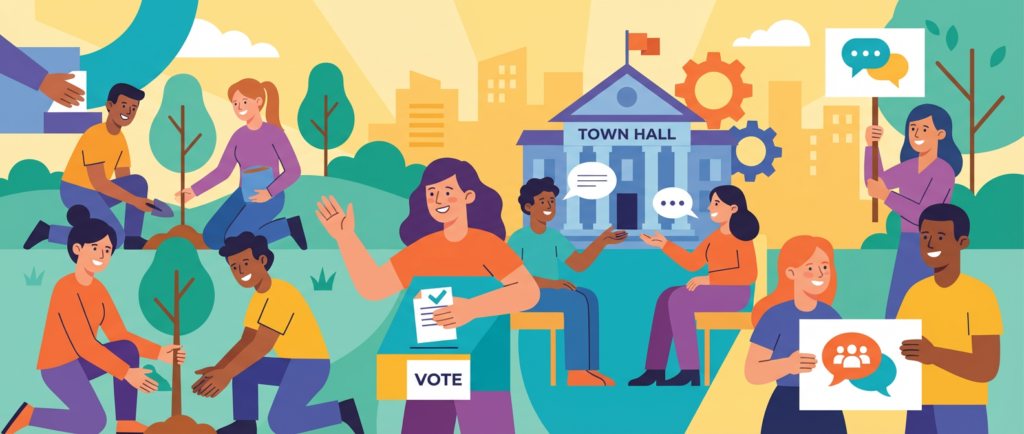
The Comfortable Myth of Ballot Box Democracy
Let me start with something that might sound heretical coming from someone who spends most Tuesday evenings at city council meetings: voting alone won’t save democracy. I know, I know. We’ve been told our entire lives that casting a ballot every two to four years is the pinnacle of civic duty. It’s a tidy narrative that fits nicely on bumper stickers and makes us feel accomplished after spending ten minutes in a voting booth.
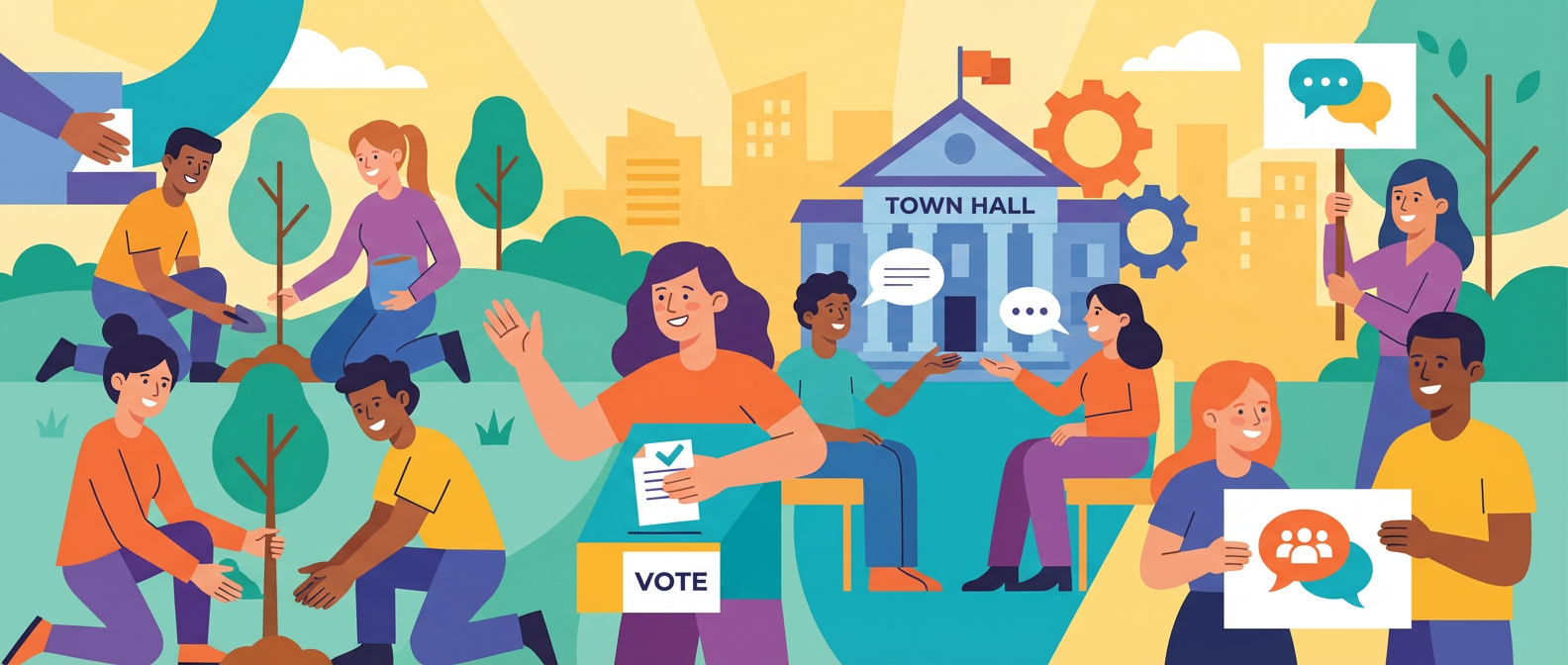
But here’s what I’ve learned after fifteen years of watching local government up close. The people who actually shape your daily life aren’t the ones you see on cable news. They’re the school board member who decides whether your kid’s classroom gets air conditioning, the planning commissioner who approves the apartment complex next door, and the parks director who determines whether that pothole-riddled trail gets fixed. These decisions happen in rooms where showing up matters more than showing off, and they happen year-round.
The uncomfortable truth? Our fixation on electoral politics has created a generation of civic spectators. We’ve been conditioned to think democracy is a seasonal sport, something that happens every few years when the yard signs sprout up. Meanwhile, the real work of self-governance continues in community meetings, public comment periods, and volunteer committees where the average age is somewhere north of retirement.

Beyond the Ballot: Where Democracy Actually Lives
Real civic engagement looks nothing like what you see on television. It’s not dramatic speeches or heated debates. It’s Rita from the neighborhood association who noticed that the crosswalk timing doesn’t give seniors enough time to cross safely. It’s the group of parents who spent six months researching playground safety standards and then presented their findings to the parks department. It’s the small business owner who testified at three different hearings about how street parking changes would affect foot traffic.
These people understand something that pure voters don’t: democracy is a participation sport, not a spectator event. They’ve figured out that the gap between casting a vote and getting results is filled with unglamorous but essential work. They know which department handles pothole repairs versus which one manages tree trimming. They understand the difference between a city council meeting and a planning commission hearing. Most importantly, they’ve learned that showing up consistently matters more than showing up loudly.
I’ve watched neighborhood activists turn around failing schools, not by voting harder, but by attending school board meetings, building relationships with administrators, and organizing other parents to stay engaged between elections. I’ve seen residents save green space from development by learning zoning law, attending planning meetings, and presenting alternative proposals. These victories didn’t happen because someone pulled the right lever in November. They happened because people stayed engaged in January and March and July.
The Skills No Civics Class Teaches
Here’s what they don’t tell you in high school government class: effective civic engagement requires a completely different skill set than voting. You need to know how to research public records, how to speak effectively at public meetings, and how to build coalitions with people who might disagree with you on everything except the issue at hand. You need to understand bureaucracy well enough to know which office actually has the power to solve your problem.
Take something as simple as getting a stop sign installed. The voting-focused approach would be to complain about traffic safety during election season and hope your preferred candidate cares about the issue. The civic engagement approach involves researching traffic data, understanding the criteria your city uses for stop sign placement, attending the right meetings, and probably organizing your neighbors to document safety concerns. One approach feels more satisfying. The other actually works.
The most effective community advocates I know are policy nerds in the best sense. They can tell you the timeline for budget approval, explain how public comment periods work, and navigate the maze of departments and committees that actually make decisions. They’ve learned that preparation beats passion, that persistence beats protest signs, and that understanding process beats understanding politics.
Why Showing Up Changes Everything
The secret weapon of longtime community organizers is embarrassingly simple: they show up when no one else does. City council meetings, school board hearings, planning commission sessions. These gatherings often draw audiences you can count on two hands, which means your voice carries weight that would be impossible to achieve in electoral politics.
I’ve watched a single parent change district policy on homework by attending school board meetings for eight months straight. I’ve seen a group of five neighbors get a dangerous intersection redesigned by presenting traffic data at consecutive city council meetings. These people weren’t political insiders or wealthy donors. They were ordinary residents who understood that empty chairs represent opportunities.
The beautiful paradox of local civic engagement is that the lower the turnout, the higher your individual impact. That school board meeting with twelve people in attendance? Your comment represents eight percent of the audience. That planning commission hearing where you’re one of three speakers? You just influenced thirty-three percent of the testimony. This is democracy at its most responsive, where individual citizens can create change that affects thousands of their neighbors.
Building Democracy One Meeting at a Time
The path from voting to true civic engagement isn’t complicated, but it does require shifting your mindset from consumer to participant. Start by picking one issue that affects your daily life. Maybe it’s traffic safety in your neighborhood, or the condition of local parks, or how your school district handles special needs students. Then commit to following that issue for six months, not just until the next election.
Learn which government body handles your issue and when they meet. Most local governments livestream meetings now, so you can start by watching from home to understand the rhythm and process. Read the agendas beforehand. Look up the staff reports. Figure out who the key players are and what their positions seem to be. This isn’t about becoming a political expert overnight. It’s about becoming an informed participant in the decisions that shape your community.
The goal isn’t to replace voting with other forms of engagement. The goal is to fill the enormous gap between elections with the kind of sustained participation that makes democracy work. Your ballot matters, absolutely. But your presence in the spaces where decisions get made matters more. Democracy isn’t something that happens to you every few years. It’s something you do, meeting by meeting, issue by issue, until showing up becomes as natural as showing up to vote.
Ready to move beyond the ballot box? Start by finding your next city council meeting date and putting it on your calendar. Democracy is waiting for you to show up.